
OILFIELD PRODUCTION CHEMICALS
Crude Oil Demulsifier Manufacturer
LANVITO is a crude oil demulsifier manufacturer in Weifang, Shandong, China, focused on custom oilfield chemical formulations for business customers. Discuss a crude oil emulsion breaker around your crude properties, dehydration or desalting process, and separation targets.
Factory established in 2012 · Weifang, Shandong, China
Overview · Products & Supply · Types · Applications · Testing · Technical Data · Enquiry
Crude Oil Demulsifier Selection for Your Application
A crude oil demulsifier, also called an emulsion breaker, is used to help separate water dispersed in crude oil. Demulsifier selection starts with the fluid and process conditions: water content, treatment temperature, mixing, residence time and the required quality of both separated phases.
Review our custom manufacturing approach and LANVITO company introduction, then share your technical brief for formulation and sample-evaluation discussion. LANVITO’s factory was established in 2012 in Weifang, Shandong, China.
Water-in-oil crude treatment and oil-in-water treatment require different evaluation approaches. Reverse demulsifier requirements should be identified separately.
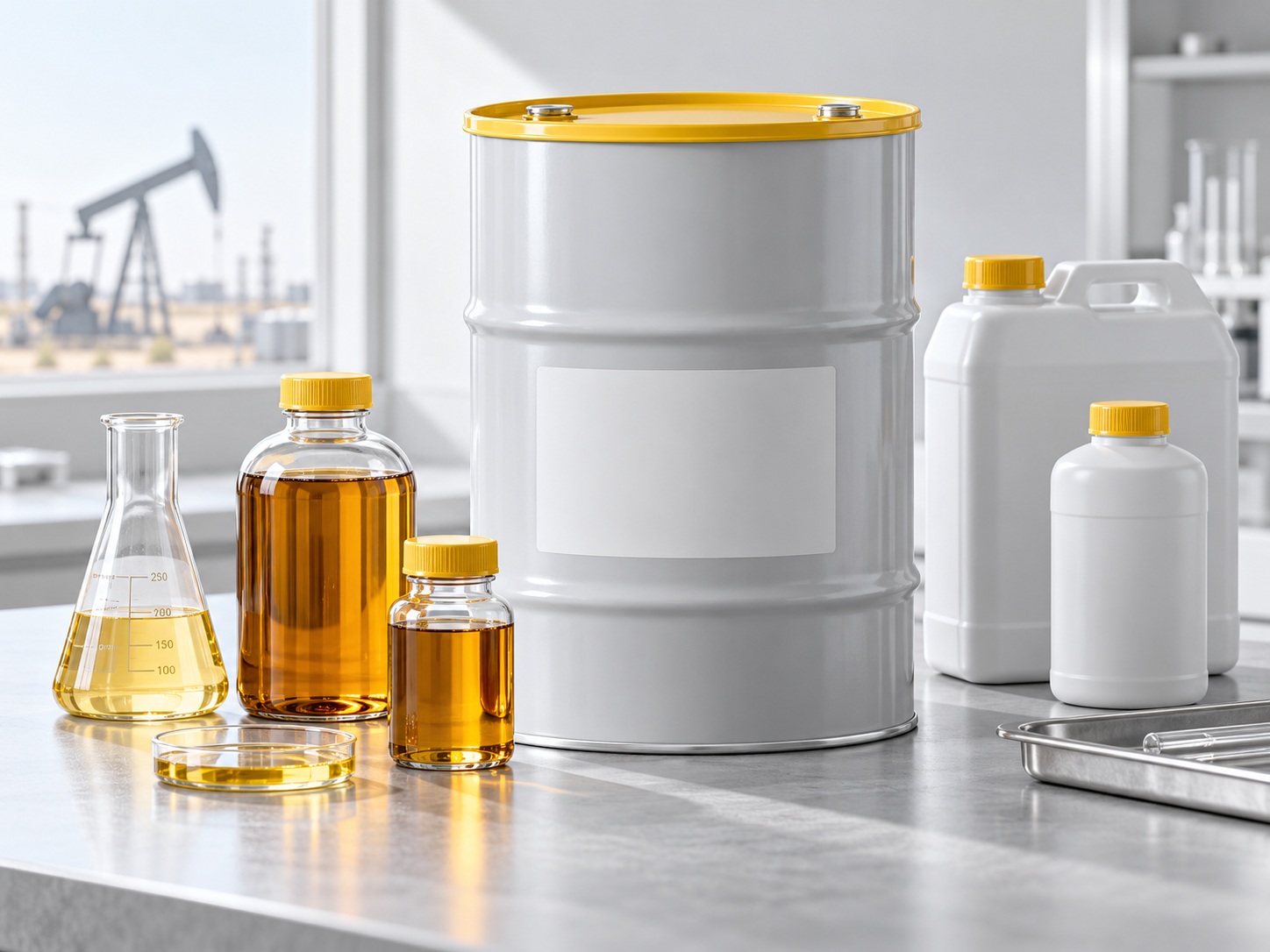
Crude Oil Demulsifier Products & Supply Options
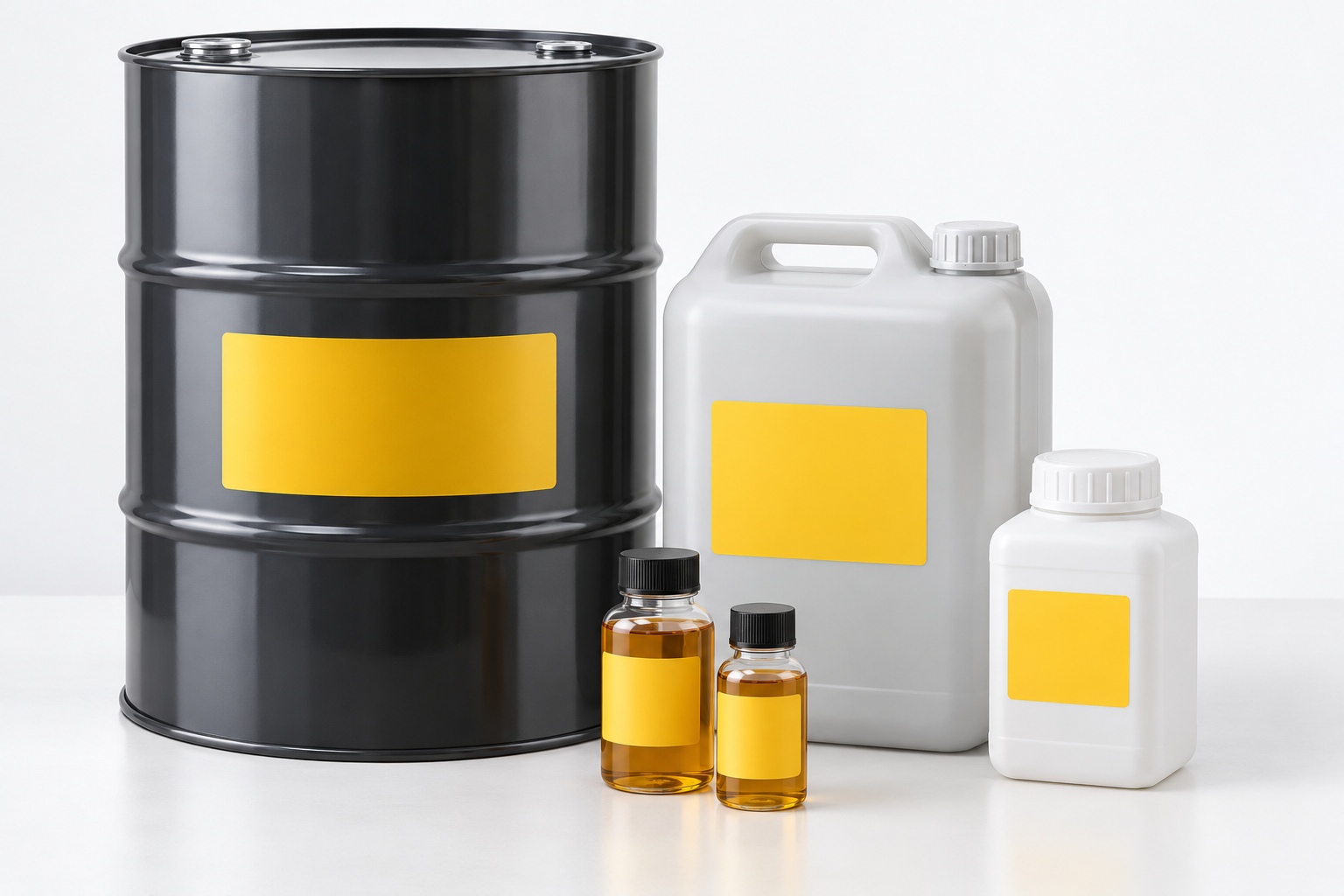
Selected formulation, packaging and handling instructions are agreed before supply.
A product brief built around your process
Discuss a finished demulsifier formulation or a custom emulsion-breaker project with a defined application and evaluation plan.
Application & formulation
Specify crude-oil dehydration or desalting, the fluid characteristics and process constraints. Chemistry, carrier system, concentration and dispersibility are reviewed for the selected formulation.
Grade-specific information
Request the proposed product’s appearance, density with reference temperature, viscosity with test conditions, solubility and relevant handling information. Numerical values should come from the actual grade documentation.
Supply & technical documents
State pack type, net quantity, order volume and destination. Request a grade-specific TDS and SDS, and confirm any batch-documentation requirements.
Compare the result your treatment needs
Water-Release Speed
Compare the speed of water release against the available process time. Check final oil and water quality alongside the early water-drop result.
Oil & Interface Quality
Review residual water, interface behaviour and separated-water quality. A candidate that performs well on one measure may need further comparison on the others.
Balanced Separation
Compare candidate formulations across separation speed and final quality under the same crude, temperature, mixing and residence-time conditions.
Demulsifier Chemistry & Formulation Directions
The chemistry families below are formulation directions for technical discussion, not a stocked-grade catalogue. Confirm the proposed composition, handling and application fit through product documentation and comparative sample evaluation.
Polyamine-Based
Polyamine-initiated alkoxylated structures offer a formulation-development route. Compare candidates against the actual crude and process conditions rather than selecting from the family name alone.
Polyol-Based
Polyol-based chemistry includes different initiators and molecular architectures. Review dispersion, compatibility and separation behaviour under an agreed evaluation method.
Alcohol-Initiated Polyethers
Alcohol-initiated polyethers may be considered as formulation components. Solubility and handling depend on the particular grade and solvent package.
Resin-Based
Alkoxylated resin systems provide another chemistry direction for emulsion-breaking formulations. Confirm the exact composition, handling requirements and application fit.
Modified & Blended
Modified components and blends combine chemistry options for specific emulsion challenges. Blending suitability and performance need comparative evaluation.
Custom Formulations
Define the crude properties, target separation quality, temperature, residence time and handling limits before agreeing a development and evaluation scope.
| Classification | What to confirm | Evaluation focus |
|---|---|---|
| Chemical family | Initiator, structure and formulation components | Compare candidate formulations on representative samples. |
| Solubility & supply form | Oil/water behaviour, concentration and solvent package | Confirm grade-specific handling and compatibility. |
| Application conditions | Crude properties, temperature and residence time | Agree the performance criteria and field validation scope. |
Chemical family
What to confirm: Initiator, structure and formulation components
Evaluation focus: Compare candidate formulations on representative samples.
Solubility & supply form
What to confirm: Oil/water behaviour, concentration and solvent package
Evaluation focus: Confirm grade-specific handling and compatibility.
Application conditions
What to confirm: Crude properties, temperature and residence time
Evaluation focus: Agree the performance criteria and field validation scope.
Crude Oil Emulsion Breaker Applications

Crude Oil Dehydration
Evaluate water separation from water-in-oil emulsions against the required treated-oil quality and the time available in the separation train.

Crude Oil Desalting
Discuss emulsion breaking within the desalting process, including wash-water conditions, mixing and the requirements of the separation equipment.
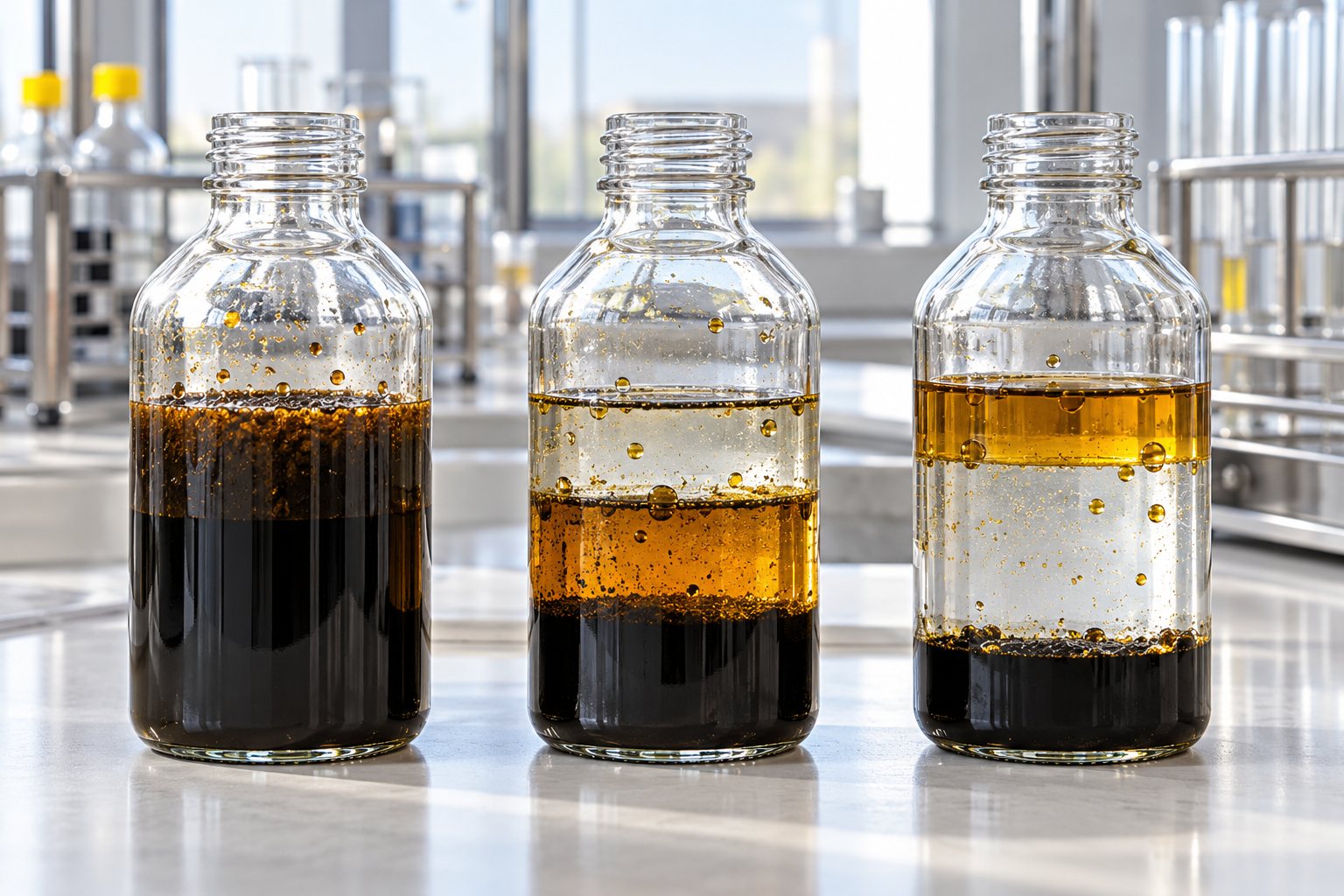
Challenging Emulsions
Heavy crude, lower-temperature treatment, solids and aged emulsions can affect selection. Define the specific challenge and agree a representative evaluation.
How Demulsifiers Work
A simplified explanation of emulsion breaking. The dominant mechanism depends on the chemistry and emulsion; interfacial tension alone does not explain every result.
01 — Reach the Interface
The formulation must disperse and contact the oil-water interface. Solvent package, fluid viscosity and mixing affect delivery.
02 — Disrupt the Stabilizing Film
Interactions with the interfacial film can weaken the stabilizing effects of natural crude components and other materials.
03 — Promote Coalescence & Separation
Water droplets can join into larger drops. Gravity separation still depends on temperature, viscosity, residence time and equipment.
What Affects Demulsifier Performance?
Oil Composition & Viscosity
Asphaltenes, resins, wax and fluid viscosity can influence emulsion stability and separation behaviour.
Water Content & Emulsion
Identify the dispersed phase, water cut, free water, emulsion age and any solids before comparing formulations.
Treatment Temperature
Use a temperature representative of the process. A warmer laboratory result may not represent lower-temperature field operation.
Mixing Conditions
Keep mixing consistent between samples. Contact is needed, while excessive shear may change the emulsion being evaluated.
Separation Time
Record results across the available residence time; fast initial water drop alone is not a complete assessment.
Dosage & Injection Point
Compare a suitable dosage range and review where the product enters the process. More chemical does not necessarily improve results.

Demulsifier Selection: Bottle Testing & Sample Evaluation
Use representative samples and a consistent protocol to compare candidates, including an untreated blank and, where appropriate, the current product as a reference.
Water drop over time: Record water volume at agreed intervals using the same conditions.
Interface & rag layer: Describe the interface and any persistent intermediate layer.
Residual water in oil: Use the agreed method to check treated-oil quality.
Separated-water quality: Assess oil carryover against the agreed objective and method.
Controlled conditions: Record sample history, temperature, dosage basis, mixing and settling time.
Record the Conditions Behind Every Result
| Sample | Temperature | Dose / basis | Time | Water drop | Interface |
|---|---|---|---|---|---|
| Blank | — | 0 / confirm basis | — | — | — |
| Candidate | — | — | — | — | — |
Blank & reference
Information to record: Sample identity, temperature, dose basis, mixing and observation time.
Candidate formulation
Information to record: Water drop, interface, treated-oil quality and separated-water quality.
This is a comparison framework, not a universal test standard. Laboratory screening supports candidate selection; controlled field validation may be required. No universal dose is specified.
Common Demulsification Challenges
Check sample condition, treatment temperature, mixing and available residence time. Compare candidate chemistry and dosage under consistent conditions before changing the field treatment.
Record the layer thickness and examine solids, sample history and mixing conditions. Judge both the treated oil and separated water, not just the water volume.
The formulation may not suit the emulsion, the mixing or residence time may limit separation, or excessive treatment may affect behaviour. Use controlled comparative testing rather than assuming more is better.
Sampling, ageing, thermal history, mixing, process variability and equipment conditions can differ. Review those differences and confirm performance through an agreed field evaluation.
Specifications, Packaging & Documentation
| Item | What to request |
|---|---|
| Product properties | Request grade-specific appearance, density, viscosity, solubility and other relevant data. |
| Technical documents | State your TDS, SDS and batch documentation requirements for confirmation. |
| Packaging & handling | Confirm available packaging, solvent-related handling limits and storage instructions for the selected grade. |
| MOQ & lead time | Confirm against formulation, pack size, quantity, destination and order scope. |
Product properties
What to request: Request grade-specific appearance, density, viscosity, solubility and other relevant data.
Technical documents
What to request: State your TDS, SDS and batch documentation requirements for confirmation.
Packaging & handling
What to request: Confirm available packaging, solvent-related handling limits and storage instructions for the selected grade.
MOQ & lead time
What to request: Confirm against formulation, pack size, quantity, destination and order scope.
Demulsifier Purchasing FAQs
Provide the application, crude or emulsion properties, operating conditions, required oil and water quality, estimated quantity, packaging and delivery destination. Include an existing specification if available.
Share the technical brief and any formulation or handling constraints. Chemistry options, feasibility and evaluation arrangements are confirmed for the individual project.
State the sample characteristics, planned test conditions and acceptance criteria. Sample availability, quantities, shipment and evaluation scope are agreed before testing.
Do not assume interchangeability. Identify whether oil or water is the continuous phase and specify the treatment objective; the appropriate product and test method must be confirmed.
Start with representative crude and an agreed treatment objective. Compare candidate formulations using the same temperature, mixing, dose basis and observation times. Review treated-oil quality, interface behaviour and separated-water quality together. An agreed field evaluation can then check the selected approach under the actual operating conditions.
START YOUR PROJECT
Discuss Your Demulsifier Requirements
Tell us about your crude oil, process conditions and supply requirements. We will discuss product options and the evaluation scope for your application.