
LANVITO · AUTOMOTIVE LUBRICANTS
Engine Oil Manufacturer for Private Label & OEM Supply
Build your automotive engine oil range with LANVITO. Discuss gasoline and diesel applications, custom formulation, private label packaging and bulk engine oil supply.

Engine Oils for Your Automotive Lubricant Range
Automotive Lubricants / Engine Oils
Product Options · Viscosity Guide · Technical Data · Private Label
LANVITO focuses on oilfield and specialty chemicals alongside automotive lubricants. This page covers engine oil manufacturing enquiries for lubricant brands, importers, distributors and business buyers. Start with the vehicle application and performance requirements, then define the formulation and packaging brief.
| Specify separately | Examples for a project brief | Why it matters |
|---|---|---|
| Application | Gasoline passenger cars; diesel passenger cars or commercial vehicles | Different engine and exhaust-aftertreatment requirements may apply. |
| Formulation description | Full synthetic, synthetic blend or mineral-based | Agree the formulation and label description for the destination market. |
| Viscosity grade | For example, SAE 0W-20, 5W-30, 10W-40 or 15W-40 | Examples explain grade notation; they are not a confirmed LANVITO stock list. |
Define all three dimensions together. A viscosity grade alone does not identify the application, formulation or performance specification.
Explore Engine Oil Manufacturing Options
Choose an application to begin your enquiry. Each project is reviewed against its required viscosity, performance evidence, packaging and supply scope; exact grades and specifications are confirmed before quotation.
PASSENGER CAR APPLICATIONS
Gasoline Engine Oils
Discuss engine oils for a passenger-car lubricant range, with the required viscosity and performance category defined for the intended application.
Specify: Engine requirements, SAE grade and destination market.
Request: Grade-specific TDS and proposed packaging.

DIESEL VEHICLE APPLICATIONS
Diesel Engine Oils
Discuss diesel engine oils for the vehicle category you serve. Identify passenger-car or heavy-duty requirements and relevant exhaust-aftertreatment constraints.
Specify: Vehicle duty, required specification and SAE grade.
Request: Proposed grade details and supply format.
YOUR BRAND · CUSTOM BRIEF
Private Label Engine Oils
Develop an engine oil product brief around your brand, market and packaging requirements. Discuss custom formulation and a coordinated product range.
Specify: Target applications, grades and pack sizes.
Request: Formulation review and OEM project quotation.
Viscosity Grade vs Engine Oil Performance
Read the SAE Grade
In a multigrade such as 5W-30, the W grade relates to low-temperature requirements; the second grade addresses high-temperature viscosity requirements.
Check Performance Separately
Two oils with the same SAE grade can have different performance categories and application suitability. SAE viscosity classification is not a complete quality rating.
Define the Target Application
Use the engine requirements, operating conditions and intended market to prepare the specification. Do not choose a grade solely because it is thinner or thicker.
Full Synthetic, Synthetic Blend or Mineral-Based?
These descriptions concern formulation positioning. They do not replace a viscosity grade or demonstrated performance requirements. For an OEM engine oil project, agree the formulation brief, intended claims and local labelling requirements before selecting packaging copy.
How to Read an Engine Oil Technical Data Sheet
Compare data for the exact proposed product and test method. Typical values describe a product; purchase specifications and batch acceptance limits should be agreed separately.
| TDS item | What it helps describe | What it does not establish by itself |
|---|---|---|
| Kinematic viscosity at 40°C / 100°C | Viscosity at the stated test temperatures. | Complete SAE grade compliance or engine performance. |
| Viscosity index (VI) | How viscosity changes with temperature. | An overall quality score or guaranteed service life. |
| Cold-cranking / low-temperature pumping data | Low-temperature properties under the relevant test conditions. | Suitability for every engine or climate. |
| Pour point | A low-temperature flow indicator measured by a specified method. | Cold-start performance or the minimum safe operating temperature. |
| Flash point | A laboratory indicator relevant to volatility and handling assessment. | Maximum permissible engine operating temperature. |
| TBN / sulfated ash, where specified | Selected chemical characteristics relevant to the application. | A universal ranking: higher values are not automatically better. |
For procurement, request the product TDS, SDS, agreed specification and available batch documentation. Confirm which figures are typical values and which are guaranteed limits.
Understanding Engine Oil Performance Claims
API Licensing
API operates an engine oil licensing system for use of its quality marks. Verify a proposed product’s actual licence status before using marks or claiming licensed supply.
ACEA Performance Claims
ACEA performance claims require supporting compliance. “ACEA approved” or “ACEA certified” is not the correct way to describe these claims.
Product-Specific Evidence
A performance statement must apply to the exact proposed formulation and grade. A factory-level claim or a viscosity label is not evidence for every product.
For private label engine oil, review the proposed performance wording and supporting documentation before approving label artwork. Manufacturing to a private-label brief does not itself establish approval by a vehicle manufacturer.
Standards guidance: API Engine Oil Licensing · ATIEL guidance on ACEA claims. These references explain terminology and are not LANVITO approval claims.
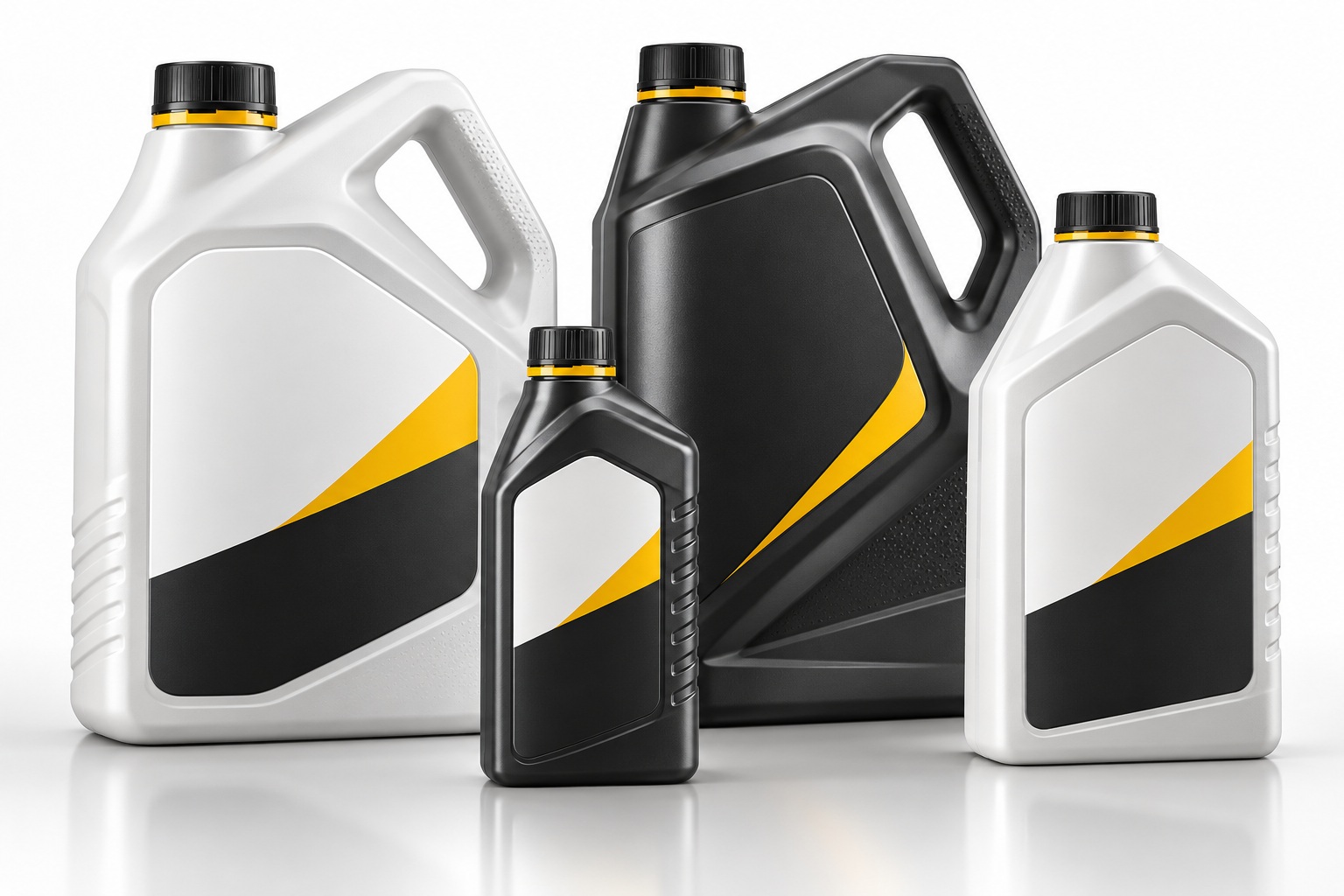
Packaging concept only; bottle formats, labels and quantities are confirmed for each project.
Preparing Your Private Label Engine Oil Brief
A clear brief helps an engine oil manufacturer align formulation, product positioning and packaging. Our factory was established in 2012 and is located in Weifang, Shandong, China.
| Brief item | Information to provide |
|---|---|
| Market & application | Destination country, customer segment and intended vehicle applications. |
| Viscosity & performance | Required SAE grades, performance requirements and evidence expectations. |
| Formulation & positioning | Desired formulation description, range structure and target cost basis. |
| Packaging & artwork | Pack sizes, containers, closures, label language and artwork responsibilities. |
| Order & delivery | Estimated quantity per grade and pack, destination and delivery terms. |
How to Compare Bulk Engine Oil Quotations
Compare offers on the same specification and delivery basis. A lower unit price is useful only when the formulation requirements, net content, packaging and included services are comparable.
| Compare | Confirm before ordering |
|---|---|
| Product specification | Exact application, SAE grade, performance wording and supporting documents. |
| Quantity & price basis | Quantity per grade and pack; whether the quote is per litre, kilogram or package. |
| Packaging scope | Net contents, container and closure, label, carton and pallet requirements. |
| Included work | Sample arrangements, artwork responsibilities and any separate setup costs. |
| Delivery terms | Destination, quoted trade terms, freight scope and proposed lead time. |
01 · Define the Brief
Send applications, target specifications, packaging and forecast quantities.
02 · Review the Proposal
Agree the proposed grade, documents, sample arrangements and commercial scope.
03 · Confirm the Order
Approve the specification, artwork, quantity and delivery terms before production scheduling.
MOQ, sample arrangements, available packaging and lead time depend on the agreed project; request confirmation with your quotation.
Engine Oil Manufacturing FAQs
Yes. Send your intended applications, required specifications, market, packaging and quantity. LANVITO can review the manufacturing brief and confirm the available project scope.
Specify the SAE grades required by your target applications. Examples such as 5W-30 or 15W-40 explain the enquiry format; the actual formulation, performance and grade availability require confirmation.
No. Oils with the same viscosity grade can differ in performance requirements, formulation and application suitability. Compare the complete specification for the intended engine application.
Do not assume universal suitability. Requirements differ by engine design, vehicle duty and exhaust-aftertreatment system. A proposed product must be assessed against the actual application requirements.
Provide the application, viscosity grade, performance requirements, quantity per grade and pack, packaging specification, destination and requested delivery terms.
These depend on the formulation, packaging and order scope. Include your estimated quantities and timing in the enquiry so the project can be reviewed.
LET’S DEFINE YOUR PRODUCT RANGE
Discuss Your Engine Oil Project
Share your product and procurement requirements for a manufacturing review.