
LANVITO · OILFIELD CHEMICALS
Crude Oil Pour Point Depressants
PPD Additives for Waxy Crude Oil Treatment
LANVITO is a crude oil pour point depressant manufacturer. Explore formulation directions, understand PPD selection and discuss your crude oil properties, evaluation conditions and supply requirements.

What Is a Crude Oil Pour Point Depressant?
A pour point depressant (PPD) is a chemical additive used to modify the low-temperature behavior of suitable waxy crude oils. Its performance depends on the oil, polymer formulation and treatment conditions. A lower measured pour point is one evaluation result; it does not by itself establish pipeline operating or restart conditions.
| Measure | What it describes | What to record |
|---|---|---|
| Pour point | A low-temperature flow indicator determined under a specified test procedure. | Method, sample preparation and thermal history. |
| Wax appearance temperature (WAT) | The temperature at which the first wax crystals are detected during cooling. | Detection method and cooling conditions. |
| Viscosity / rheology | Resistance to flow and, where relevant, yield behavior. | Temperature, shear conditions and sample history. |
How Do Pour Point Depressant Additives Work?
As waxy crude cools, wax crystals can grow and interact to form a network that restricts flow. Suitable PPD polymers can influence crystal growth and aggregation. The objective is to weaken the network under the evaluated conditions, rather than remove all wax from the oil.
01 · Cooling & Crystallization
Wax crystals begin to form as the crude cools. Their behavior depends on the composition and temperature history of the oil.
02 · Polymer–Wax Interaction
A compatible polymer can interact with the crystallizing wax and modify crystal development or aggregation.
03 · Evaluate the Flow Response
Compare treated and untreated samples under the same conditions. Confirm which properties improve and which still require separate evaluation.
Conceptual mechanism sequence; not a laboratory result or a performance guarantee.
Pour point depression, wax deposition control and removal of existing deposits are different treatment objectives. A PPD is not automatically a wax-removal solvent; deposition performance requires its own evaluation.
Types of Crude Oil Pour Point Depressants
Common polymer families include EVA, acrylate-based polymers and maleic anhydride copolymer derivatives. Modified and blended formulations may combine these directions. Chemistry names help describe a formulation, but do not identify the best product for every crude oil.
| Family / direction | Technical distinction | Selection consideration |
|---|---|---|
| EVA-based PPDs | Ethylene–vinyl acetate copolymers and related modified systems. | Vinyl acetate content, polymer structure and solubility influence the response. |
| Acrylate-based PPDs | Polymers with alkyl side chains and tunable backbone / side-chain structures. | Evaluate the relationship between polymer structure and the crude wax distribution. |
| Maleic anhydride derivatives | Copolymers modified through routes such as esterification or amidation. | Evaluate side-chain structure, polar groups and compatibility with the oil. |
| Modified & blended PPDs | Polymer modification or combinations of formulation components. | A formulation strategy, not a mutually exclusive fourth base chemistry; verify any benefit experimentally. |
Pour Point Depressant Examples: Chemistry Is Not a Grade Specification
EVA-based and acrylate-based systems are examples of PPD chemistry, not interchangeable commercial grades. Product form, active concentration, solvent, viscosity and handling conditions must be confirmed for the particular formulation. Oilfield formulations should not be assumed interchangeable with lubricant PPD additives.
Explore Crude Oil PPD Product Options
Start with a formulation direction, then request grade-specific information for your crude oil. The cards below are enquiry routes, not confirmed stock grades. Exact chemistry, specifications, availability and sample arrangements are confirmed during technical review.
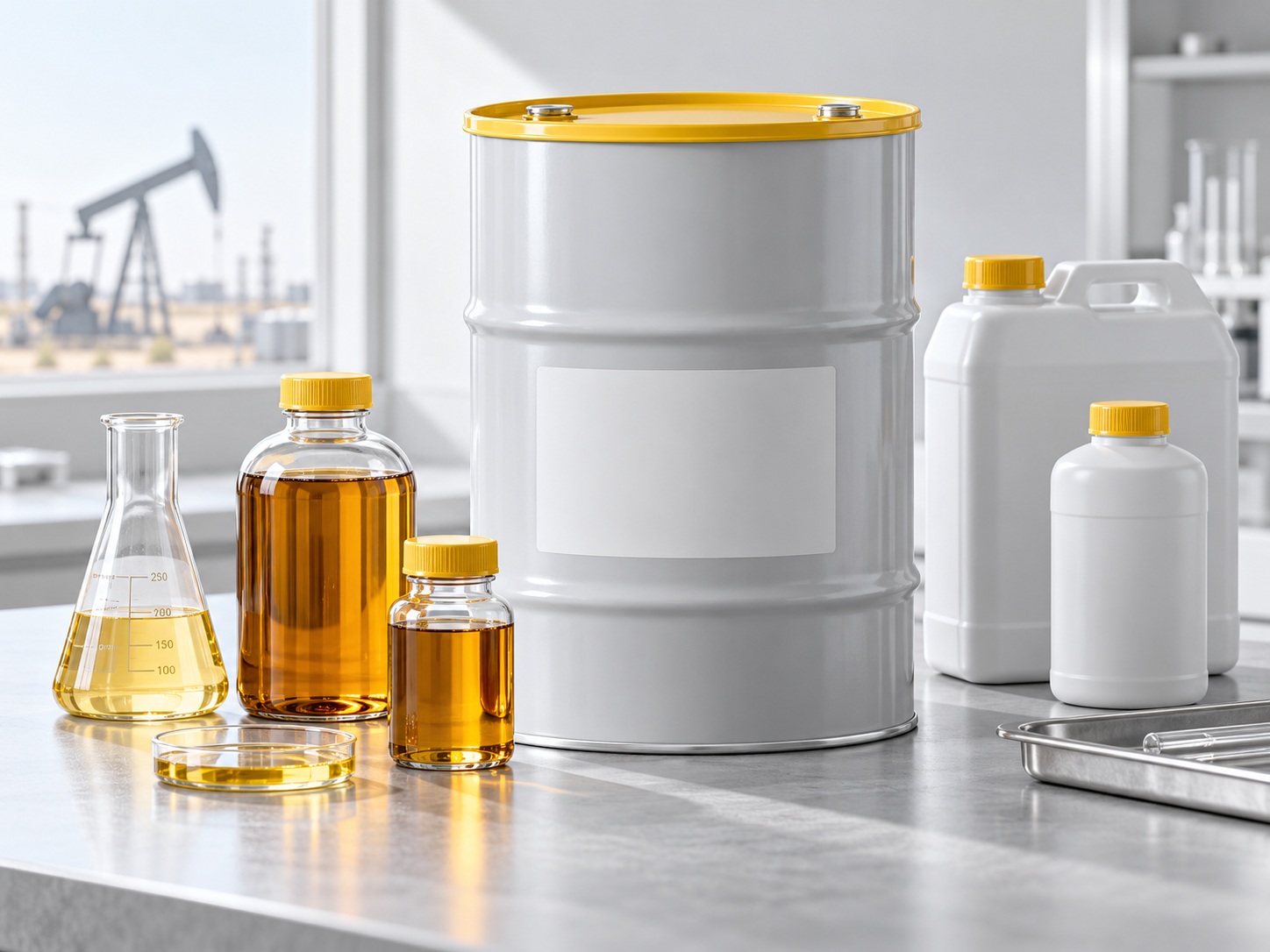
EVA chemistry
EVA-Based PPD Enquiry
Discuss an EVA-based formulation direction for your crude sample. Confirm polymer characteristics, carrier and evaluation conditions before selecting a grade.
Grade / specifications: Request technical confirmation
Documents: Request product-specific TDS / SDS
Evaluation: Provide crude sample information

Acrylate chemistry
Acrylate-Based PPD Enquiry
Discuss an acrylate-based formulation direction and the target crude wax characteristics. Product properties and grade availability require technical confirmation.
Grade / specifications: Request technical confirmation
Documents: Request product-specific TDS / SDS
Evaluation: Provide crude sample information
Modified / blended direction
Maleic-Derivative / Blended PPD Enquiry
Discuss a modified or blended formulation brief for the treatment objective. The proposed chemistry and supply form are agreed after review.
Grade / specifications: Request technical confirmation
Documents: Request product-specific TDS / SDS
Evaluation: Provide crude sample information
Custom Crude Oil PPD Formulation
Provide your treatment target, crude oil data, dosage constraints, storage and dosing conditions, and intended order quantity. LANVITO can discuss the formulation and supply scope for the project.
How to Select the Right PPD for Your Crude Oil
| Compare across candidate grades | Why it matters |
|---|---|
| Polymer system and carrier | Compatibility and treatment behavior must suit the oil and application. |
| Active concentration and dosage basis | Compare commercial-product dose and active-polymer dose consistently. |
| Viscosity at a stated temperature | Check product handling and metering requirements. |
| Product storage and low-temperature handling | The additive itself must remain suitable for the intended handling conditions. |
| Crude oil test response | Compare performance using the same oil, preparation and evaluation procedure. |
| Packaging and technical documentation | Confirm available pack formats and product-specific TDS / SDS. |
Crude Oil Information
Provide the source, untreated pour point, known wax content, available rheology data and relevant sample history.
Treatment Objective
State the target property and conditions. Distinguish pour point reduction, flow behavior and wax-deposition control.
Operating & Dosing Conditions
Describe temperature changes, mixing, other chemicals, storage conditions and dosing equipment constraints.
There is no universally best PPD chemistry or fixed dosage for every crude oil. Select candidates through representative evaluation and confirm the operating application separately.
Laboratory Screening & Performance Evaluation
01 · Define the Sample
Identify the crude source and representative sample. Record storage, preparation and thermal history.
02 · Plan the Comparison
Include an untreated control, suitable candidate formulations and clearly defined dosage levels.
03 · Keep Conditions Consistent
Use the same treatment, mixing, cooling and measurement procedure for comparable samples.
04 · Review the Results
Assess repeatability and the relevant properties, then plan application-specific confirmation.
| Record | Purpose |
|---|---|
| Sample ID and preparation | Make results traceable to the crude sample and its history. |
| Treatment temperature and mixing | Allow the treatment process to be reproduced. |
| Dosage and concentration basis | Avoid confusing product dose with active-component dose. |
| Test method and measurement conditions | Identify what was measured and under which conditions. |
| Control and treated results | Compare the actual change without substituting illustrative values. |
| Repeat observations and limitations | Show variability and the boundaries of the evaluation. |
ASTM D5853 is a crude-oil pour point test method. Report the method and procedure actually used. Pour point screening may be supplemented with rheology or wax-deposition testing where those properties are part of the treatment objective.
No LANVITO test results are presented here. Request product-specific evaluation information for your project.
Application Considerations & Troubleshooting
| Question | What to review |
|---|---|
| Little change in measured pour point? | Recheck formulation match, dosage basis, sample preparation and treatment conditions. |
| Different results with another crude batch? | Review crude composition and sample history; repeat the comparison for the new oil. |
| Laboratory and field behavior differ? | Compare actual temperatures, mixing, residence time, co-injected chemicals and flow conditions. |
| The additive is difficult to pump in cold conditions? | Check the additive viscosity and handling requirements separately from the treated crude response. |
| Pour point falls but wax deposits remain? | Evaluate deposition separately; do not infer wax-control performance from pour point alone. |
Injection location, treatment temperature, dilution and handling should follow the proposed product guidance and agreed evaluation plan. Review the SDS before storage or use; do not assume all PPD formulations have identical handling requirements.
Packaging formats and availability require confirmation.
Specifications, Packaging & Quotation
Request a product-specific TDS and SDS, proposed grade specifications, available packaging, sample arrangements and delivery requirements. MOQ and lead time are confirmed against the formulation and order scope.
What Affects Pour Point Depressant Price?
The quotation depends on the proposed formulation, active concentration, quantity, packaging and delivery terms. A lower price per kilogram does not establish a lower treatment cost: dosage and the achieved result must be evaluated on a consistent basis.
Crude Oil PPD FAQs
PPD stands for pour point depressant. It describes an additive used to modify low-temperature flow behavior in suitable oils; the abbreviation alone does not identify a specific chemistry or commercial grade.
EVA-based polymers, acrylate-based polymers and maleic anhydride copolymer derivatives are common technical families. Modified and blended systems are also evaluated. Actual product scope and grade availability require confirmation.
Use representative crude samples and a controlled screening plan. Define the commercial-product or active-component basis, compare candidate doses and review the relevant operating conditions.
Do not assume interchangeability. Pour point in lubricants and in crude oils involves different formulations and evaluation requirements. Confirm suitability for the specific oil and application.
The treatment objectives differ. Pour point reduction does not by itself establish deposition control, and a PPD should not be assumed to dissolve existing wax deposits.
Provide your crude oil information, target properties, treatment conditions, quantity, packaging and destination. Ask for the proposed grade TDS, SDS and sample evaluation arrangements.
Discuss Your Crude Oil Requirements
Share the application and properties you need to evaluate. Our factory was established in 2012 and is based in Weifang, Shandong, China.